When you were growing up, how connected were your family and your school? Did your family feel welcome at school? Did your family and your teachers make decisions about your education together? The answers to those questions may have had a real impact on your experience.
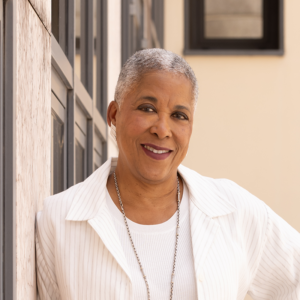
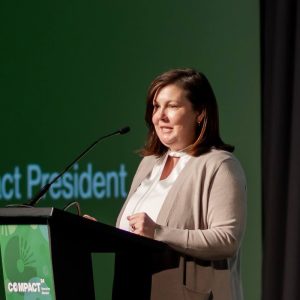
Today I talk with Dr. Karen Mapp, who has been studying and teaching about family-school partnerships for more than 25 years. She is a Professor of Practice at the Harvard Graduate School of Education and the author or co-author of several books including Powerful Partnerships: A Teacher’s Guide to Engaging Families for Student Success. Her Dual Capacity-Building Framework for Family-School Partnerships is used by school districts across the country. She spends much of her time training teachers, administrators, and district leaders about how to partner equitably with families.
Karen was one of the mentors who set me on the path to partnership work. In our conversation, Karen explains what schools that excel at family engagement do differently—and the results it can have for students. She shares how her own family supported her education and why that was so critical to her success. We also talk about this political moment, why teachers receive so little training in engaging families effectively, the deep-seated biases that get in the way, and some hot-off-the-press research.
The report Karen discusses in the episode is The Engagement Advantage: Findings from a Mixed-Methods Study on Family-School Partnerships by Dr. Eyal Bergman and Dr. Zenzile Riddick
Here are some other great reads from Karen and her Co-Authors:
—————————-
If you like this show, you can hear all the episodes and more at https://partnershipwork.org
You can also join our free Substack newsletter at https://partnershipwork.substack.com/
Partnership Work is an independent podcast, produced with the support of Urban Media Arts in Malden, MA. Visit them at https://urbanmediaarts.org/
The music for this episode was Hazy Reflections from the NFL Music Library on APM Music.
Karen Mapp:
My mom had her Sunday best clothes on. I was like, uh-oh. And she’s like, Karen, I’m going to drive you to school. She had her little hat on, her pocketbook. I was like, oh, man, this is trouble. And we show up at the middle school, and she goes to the principal. Luckily, he took her in, and they were in there for about 15 minutes. And when she came back out, she said, you’re all set. And I got transferred to the college track, right? But, you know, Paul, I think about that because I think about how many other families may not have known to do that, right? And I probably wouldn’t be talking to you today if it wasn’t for the fact that my mom intervened at that very critical moment.
Paul Kuttner:
Hey, welcome to Partnership Work, where we explore what it takes to move from isolation to action. I’m Paul Kuttner. When you were growing up, how connected were your family and your school? Did your teachers reach out to your family? Did your family feel welcome at school? Did your family and your teachers make decisions about your education together? The answers to those questions may have had a real impact on your experience in school.
The extent to which schools and families collaborate as partners is central to educating young people and improving schools. But despite advocacy from organized families, decades of research showing the impact of family engagement and some major policy wins, most schools still struggle with this piece of the puzzle.
Today I talk with Dr. Karen Mapp, who has been studying and teaching about family school partnerships for more than 25 years. She is a professor of practice at the Harvard Graduate School of Education and the author or co-author of several books, including Powerful Partnerships, A Teacher’s Guide to Engaging Families for Student Success. Her Dual Capacity-Building Framework For Family-School Partnerships is used by school districts across the country. She spends much of her time training teachers, administrators, and district leaders about how to partner equitably with families.
Karen was one of the mentors who set me on the path to partnership work. Serving as her teaching assistant and working with her on research projects had a profound impact on how I understand partnerships, community engagement, and the power of relationships.
In our conversation, we start by defining family-school partnerships and why they matter. Karen explains what schools that excel at family engagement do differently, and the results it can have for students. She shares how her own family supported her education and why that was so critical to her success. We also talk about this political moment, why teachers receive so little training in engaging families effectively, the deep-seated biases that get in the way, and some hot-off-the-press research.
If you enjoy the show, please share it with a friend or rate and review us on your favorite podcast platform. Those are some of the best ways to help new listeners find us. You can also sign up for the free Partnership Work Substack newsletter at partnershipwork.substack.com. And you can find all our episodes, transcripts, show notes, and more at partnershipwork.org.
And now, Karen.
Paul:
Dr. Karen Mapp, thank you so much for joining me on Partnership Work.
Karen:
It’s good to be here, Paul. I know we’ve been trying to pull this together for a while, so we finally did it. Hooray!
Paul:
Yeah, I know, it’s really good to see you. We’re going to spend some time today talking about family-school partnerships. You are the queen of family-school partnerships in my mind, and so I’m really excited to ask you about it. But before we get into all the stories and details, I want to just get the definitional questions out of the way. So what are family-school partnerships and why are they important?
Karen: So, you know, there’s a long and deep research history now on what this, what do we mean by partnerships between home and school? And what we’re really talking about is where these two entities, so we’ll stick with school and family for now, where they really work together in a very reciprocal, sharing, two-way relationship where both parties are respected. And their knowledge, whether it’s the knowledge about the curriculum and then the family side, the knowledge about their child and the community in which they’re situated, is really valued and seen as Really, really important to support the child in every way possible so that they can succeed.
And we talk about partnership because when you think about what’s required, In a healthy partnership, there’s a lot of things. There’s trust, there’s respect, there’s accountability, there’s integrity, and there’s vulnerability. So all those things that, you know, when we think about having a healthy partnership with someone in our lives, all those pieces go into this partnership between home and school.
And so that’s our North Star. That’s what we want. That’s the kind of partnership we want. Now, getting there, you know, we’ll be talking about that probably, is a whole other story because in many cases, this definition of partnership that I just laid out isn’t quite what a lot of educators and families have experienced.
Paul:
So you mentioned there’s a lot of research on this. Why do we care about family school partnerships? Why are they important? Why do we need them? Karen:
Yeah, well, we know now from the research that these partnerships are actually not a nice to have, but they’re actually an essential strategic move that you must have in order for your schools to succeed. We just did a wonderful study with Learning Heroes. It just got launched a couple of weeks ago where we followed up on something that I had noticed that happened during and after COVID. I do some work with superintendents and get to talk to them quite a bit. And they told me that one of the things that they noticed was that their schools that had had strong partnership cultures before COVID were the same schools that fared better during and after COVID In terms of grades and test scores and in terms of attendance, right?
And so I happened to be on a webinar and said this. And luckily, somebody from Chan Zuckerberg heard me and said, we’ll fund a study. So over the last two and a half years, we’ve been doing a study. And guess what? We found out that the schools that maintain these partnerships throughout COVID, we do see that – and we isolated for all other variables – and what we found out that the family engagement piece was one of the key indicators of resilience to, you know, any kind of chaotic circumstances that may happen in schools.
So when we talk about why partnerships, it’s a huge big deal in terms of your school’s ability to thrive during chaotic circumstances like a COVID disruptor and then period when it comes to anything else. So these schools do better. Their grades were higher. Their test scores were higher. And what we saw is that they did not suffer from the type of chronic absenteeism that a lot of schools actually still are dealing with post-COVID.
Paul:
And do you have a sense of why that was true? What was it about those relationships that helped the school thrive during COVID?
Karen:
Well, you know, I think we’ve learned, and this isn’t just family and community engagement research, it’s research that actually even comes from sort of the business community, that relationships are the key to everything. I don’t know if you remember, I think when you were a student with me, we read a book called Trust in Schools by Tony Bryk and Barbara Schneider. And when they were trying to unpack what makes schools thrive and what makes schools do well, the key piece, the foundational piece was the relationships between the staff and the families. And relationships really drive everything else.
When you have these strong relationships, particularly of trust, and they talk about this concept called relational trust in the book, When you have that, everything else works. And they use the metaphor of the oil in the engine of a car. For those of you out there who have electric cars, you don’t have to worry about this anymore. But for those of us who are still driving hybrids and gas guzzlers, The oil makes everything else function. And boy, oh boy, if you forget to put that oil in or change the oil, it really causes some pretty major and significant problems with your engine running smoothly.
So what they found was that these relationships of trust, where there’s respect and there’s integrity and personal regard for each other and where we see each other as competent human beings, that those places function well. Everything else rests on top of this foundation of relational trust.
Paul:
Could you give us an example maybe of what a really high quality, thriving family school partnership looks like?
Karen:
Well, before I do that, let me just say this. I don’t want people listening to think I’m throwing shade on educators. Because here’s the deal. We’ve done a lousy job in higher ed and all of our training programs of building the capacity of our educators to do partnerships. The kind of partnerships I’m talking about where we know how to cultivate trust and relationships with families, where we know from the research what actually works to make a thriving partnership, which is what I’ll get to in a minute.
You know, when I do speaking engagements around the country and the world, a lot of times I ask this question. So I was just at a wonderful conference called Playing Talk where there were 3,000 educators, mostly teachers. It was absolutely spectacular. And I was really honored to be their keynote. And I asked all these folks, I said, okay, how many of you in this room during your pre-service training had a course on family and community engagement? And of the 3,000 people in that room, only two people raised their hands.
So, you know, this is why people don’t have the mindsets because first of all, we haven’t really told them the truth that knowing how to do this work is integral to their success as an educator. We made them think that this is just something that’s nice to do when you have time. When you get a moment, maybe connect with the families of the children that you’re teaching. We haven’t told them, this is a part of your pedagogical success. This is a part of your pedagogical strategies. Because now we know that that’s the case, right? So that’s why I say I don’t throw shade on educators because we haven’t really shown them how to do this work well. And I’m proud to say here at the ed school, got a full 12-week course, people leave with those skills.
So when I look around the country at the schools that are doing this well, and this is the other thing that we found from the Learning Heroes study, we found that there are four things that what we call bright spot schools do When they’re doing partnership well. The study just came out, so I might not get all four of these right. I might have to look it up.
But one of the things is that the leadership, there’s a mindset there that family engagement is important. So people in that school community, it’s almost a part of their DNA. It’s part of their culture. Families are important, and we’ve put in the infrastructure.
That’s the second part. We put in the infrastructure structure to make sure that family engagement happens. So for example, we showed a slide where we showed the master schedule at a typical school. And that tells you for each segment of the day, what’s happening, what courses are being taught. Well, a principal at a school in Baltimore actually put the family engagement time on the master schedule for his teachers. So it’s built into the schedule. So at that place, everybody knows that at this school, family engagement is a part of our strategic plan. And we actually provide time for that to take place. We provide time for that to happen. So that’s another thing that we see at these schools.
One of the other things that we see is that the school really takes time to prioritize sort of one-on-one meetings with families. So there’s a really intense communication strategy where they want to make sure that they do some one-on-one meetings with families, and a lot of times it is in person. So they try to capitalize on any time that maybe families are doing drop-ups or pick-up, or they do home visits, or they make sure that they at least do maybe Zoom calls where they can talk to families one-on-one So there’s a real intentional strategy to make sure that, you know, they know the families of the children in their schools.
And then the last piece is that, again, it’s that relationship piece. They make sure that the relationships are personal. There’s conversations, two-way conversations where people, you know, share their stories, Where, you know, everybody knows everybody. People know each other’s names and they pronounce them correctly. I mean, it’s all these little things that these schools are very strategic about and very intentional about. So that’s what we found at these bright spot schools. Again, that the mindset of everybody in the building is that families are equal partners. You know, the leadership provides really clear vision about the importance of family engagement and creates like an infrastructure.
And actually, there’s high expectations for family engagement. But there’s sometimes, you know, some sort of accountability strategy or measure that they use. Again, one-on-one communication is prioritized. And then the development of these relational trust partnerships is really important to them. So those are the four things.
Now we see this is different at different schools, right? At high schools, they do it differently than elementary schools, you know, maybe with high school parents, you know, they may go into the community and do it there, because you know how freaked out kids get at the high school level about having the families in the building. So maybe they do something in the community. But those are the four sort of characteristics we see of schools that are really prioritizing family engagement and doing it really well.
Paul:
Great. What do you think are the biggest things that get in the way of that kind of effective family engagement?
Karen: So, you know, I always try to assume good intentions, right? So I start from the place of the lack of training. So that’s, that’s really where we started. It’s okay. Folks haven’t been trained, but what happens is that when folks haven’t been trained, you know, there’s a years ago, there was a survey of the American teacher that has done by MetLife. And, you know, what we found out is that teachers are actually afraid of parents. You know, they go into these jobs and because they weren’t trained on how to communicate with families, that first parent teacher conference, or that first open house, a lot of new teachers are terrified because they haven’t been trained on how to talk to families.
I have a lot of students here that say to me, oh, Dr. Mapp, I love teaching because I love kids. And I say to them, well, you got to love the whole ecosystem that surrounds the child, right? And when we say families, obviously we mean all adult caretakers. So it could be grandma, grandpa, auntie, uncle, et cetera. So I assume that it’s that they haven’t been trained.
And you know, our colleague and friend, Soo Hong, has done a lot of research in this area about what teachers need to be able to do this work well. And they do need to be trained, they need to be mentored, they need to be coached. Under some of that is bias. So, you know, when you have educators who are teaching in schools where the school community population is very different from what they are familiar with or where they come from, you know, again, a lot of times there’s fear.
And let’s face it, with all that we hear in the media, all that we get bombarded with and social media, all of those things that we breathe in every day will sometimes cause us to have biases about people who are different than us. So some of the work that we do with educators is like, let’s be honest. Let’s sit down and talk about what are some of the biases that we might have? What are some of the ghosts?
You know, Sarah Lawrence-Lightfoot wrote that wonderful book, The Essential Conversation. And one of the chapters is called Ghosts in the Classroom. And it’s about what’s that baggage that we bring to this relationship? What are those things that we really need to address about how we may think of our families that we’ve really got to interrogate?
Paul:
That’s super helpful. I want to come back to some of those ideas, but I want to spend a little time talking about you, if you don’t mind. So what was your experience when you were a young person in school? How were your family members involved in schooling and how do you think those early experiences might be shaping the way you do this work today?
Karen:
So it’s interesting, you know, everybody in my family was involved in my schooling. I come from a big extended family and my mom was very much involved. She was very much in the PTA. I think she was the PTA secretary. Some of this, you know, I didn’t really see until I got older. Um, but you know, the teachers all knew me, they knew my family. I had several educators. My godmother was a teacher in the school that I went to. Um, my other godmother was, was a preschool teacher and I was in her preschool. So a lot of the women in my family were very, very much engaged in My coming along as a student.
Again, some of it was invisible to me. But now when I look back, I realize that some of the extra attention that I got from teachers and my mom kind of knowing what to do and knowing how to support me at home was because she was in communication with my teachers. And she knew, you know, okay, she should be able to do this XYZ task, you know, by the end of this quarter. And so my mom was like, okay, Karen, let’s, let’s try this reading drill at home. And unbeknownst to me, the reason why my mom was able to do that was because she was in communication with my teachers.
And I also had a bit of an incident when I transferred. So I, I grew up in New Haven, Connecticut until sixth grade, we moved to Bramford, Connecticut. And I was a really, really, really good student. And when we moved to, so, so New Haven was a very integrated community. In fact, there’s books that have been written about New Haven. My dad went to an integrated high school, right? in the 1940s. And that’s unheard of for a lot of people. So a very integrated community.
And then when we moved to Brantford, I was one of maybe five or six African-American kids in the whole school. And so the first day I got to school, seventh grade, all excited. And they had big time tracking back then. And even though I had all A’s from my primary school, I was tracked into the lowest grade at the school. And I didn’t know what was going on. I came home. I was really upset. I told my mom, you know, I’m in class with a lot of special needs kids. And in fact, the teacher kind of recognized that I shouldn’t be there. And she asked me to be her assistant that day. But she didn’t do anything about it.
So I told my mom and the next morning, my mom had her Sunday best clothes on. I was like, uh-oh. And she’s like, Karen, I’m going to drive you to school. She had her little hat on, her pocketbook. I said, oh, man, this is trouble. And we show up at the middle school, and she goes to the principal. Luckily, he took her in, and they were in there for about 15 minutes. And when she came back out, she said, you’re all set. And I got transferred to the college track, right?
But, you know, Paul, I think about that because I think about how many other families may not have known to do that. right? And I probably wouldn’t be talking to you today if it wasn’t for the fact that my mom intervened at that very critical moment. So that’s how, you know, when I started doing this work, I remembered that story. I remembered that moment where my mom, and probably in conversations with my dad, completely changed the trajectory of my life, right? So that’s partially why I do this work because I know how important it is for families and staff to really be in sync with each other.
Paul:
So what, was the first position you had connected to family engagement? The first position I had was when I was an admissions officer at Trinity College in Hartford, Connecticut. So I got that job in 1986. I had been working for corporate. I had worked for AT&T right out of college and decided that that was not my calling and I’d left that job. And it was really sort of luck and serendipity that I got the job at Trinity because I actually was an active alum and found out that this job was available and applied for it.
So in that position, I got a chance to travel all over the country and talk to usually juniors in high school and actually be at college fairs where their families would show up. And I began to figure out that families need to know about what their child should know and be able to do in the fifth and sixth grade in order to make them ready for colleges like Trinity, Wesleyan, Yale, Harvard, you know, cause there’s courses that kids have to take really in seventh and eighth grade, like algebra in order to get them ready for the kinds of courses that colleges look like that they need to take in high school.
So I said, oh, you know, I need to start talking to parents of kids when they’re young. So at Trinity, I did this program where we invited the children to come to Trinity and make them college students for a day. It was really cool. And the kids got Trinity College backpacks. They got IDs. We had the college students, we would assign one kid for, we had kids, college students that volunteered to do this. We talked to the faculty and so it was okay to have these fourth graders in their classes with them.
And that night we invited all the parents to come to Trinity and I had someone from the college board come and they were going to talk about like how to prepare for financing and also for testing. So at all the schools that I went to, where we invited them to this, the one thing that was a common thread was that they said to me, we’re going to give you the kids, but you’re never going to get the parents to come to an event at night. We don’t have, you know, this was done with, you know, Trinity College around Trinity is, you know, population of sort of marginalized folks in terms of socioeconomics. And, you know, I did hear that, well, you know, our parents don’t care. And so, you know, we have activities, two parents show up.
So what I did was when I sent the invitations home, I told all the parents that the kids were going to be featured in a movie. So what we did was we had, you know, the kids that videotaped the football games, I had them go around campus and videotape these kids all day. And then at like three o’clock, they ran back to the whatever video studio they had, and they put together this five-minute video for me. I told them, make sure you get every single kid in that video. Like even if it’s for two seconds and they did.
And Paul, we got like 200 parents to show up. We had, we had dinner, but they were so charged up. My kid’s going to be like in a video. And then once we got them in there and, you know, I told them about why we were doing this. And we had my buddy from, from the college work come and we broke them up into small groups.
And you know me, we did some turn and talk and all that stuff. And man, those parents called me for months after that. One woman made me cry. She said, you know, my child runs home every day now and says, mom, I’m going to college. So I got to be a better student. And she said before that, he was like, didn’t really care. So that was my first experience with Sort of hearing school people say, oh, these folks don’t care, and then seeing the exact opposite.
And that’s when I started asking questions about, okay, how can I fix this? Because I see what happened with me with having such an engaged, you know, my family was so engaged. I really think it’s important. And I went and talked to one of my mentors, Edgar Beckham, who was at Wesleyan at the time, and he said, looks like you need to study this. You know, you haven’t taught, and so you’re not going to have any credibility unless you get your doctorate. And that sort of launched this whole thing.
Paul:
So those questions eventually led you to the Harvard Grad School of Education, where you were teaching family school community partnerships for many years now. Now, when you first started teaching this, what were some of the early mistakes you made or what are the things you had to learn about teaching educators about engagement?
Karen: Let’s see. Well, I think that I was not aware at the time, or I didn’t have words to describe the resistance that I saw, even in students who signed up for my class. Okay, so you sign up for my class. I figure, all right, you’re eager to learn how to do this well. But what I found was that many of my students still had these mental models of involvement with families versus engagement with families.
So it was these models where the families were still kept at a distance where, you know, communication was one way. We give you stuff to do. And if you do it, you’re a good parent. And if you don’t, you’re a bad parent. We don’t reveal anything about ourselves, God forbid. We keep you at arm’s length and the relationship is very transactional or we do it out of compliance. So we get Title 1 money, which requires us to do some family engagement. So we’re going to have three or four programs, whether you show up or not, doesn’t matter. Just as long as we had it, we can check it off and say we’re done.
So I had folks in my class who thought, okay, I’m, I’m here to just learn how to do that better. But this woman is talking about me really sharing of myself, being vulnerable, you know, sharing power. What? What do you mean sharing power? What are you, nuts? You know, I even had school principals who were in my class and looked at me and said, what are you talking about? Parents helping me make decisions? Parents being involved in trainings?
And so I realized I had to have people come into class who had actually done it. They needed to see it. Because I think, Paul, we’d read all this theory, and we’d read all these studies, and we’d even read case studies of schools that had done it. But until they actually saw live human beings talking about how they had transformed their school into one of these places that would count as a partnership school, I think they thought it was all aspirational and not real.
You know, after that first year, I made sure that I brought people in, did panels with families, did panels with principals. You know, we even would go to some of the schools here in Boston that were doing it well. They had to see it to believe it. And, you know, I still try to make sure I do that now. With Zoom, it’s a lot easier, right, to bring people in and have folks talk to my students. And I actually have my students work with schools. I just didn’t realize that, you know, to unlearn some of the bad habits people had learned, you know, you really need to have them feel and experience a different model.
Paul:
This is something I’m super curious what you’re going to say. You know, education is always very political and it’s very fraught. It’s a battleground always.
Karen:
Especially now.
Paul:
Yeah. Right now it seems really vicious. And I also noticed that the right in particular has really been pitting parents and teachers against each other as part of that. But has the current political climate, the last decade or so, changed the work of family-community partnerships? What have you seen that’s changed, that changed how you teach your students?
Karen:
So, you know what’s really interesting, Paul, is that, you know, the National Association for Family School Community Engagement has done a lot of work with, you know, some of the policy stuff around family engagement. And they were very much involved in conversations about this Parents’ Bill of Rights that had come up a couple of years ago, you know, very much pushed by, you know, Moms for Liberty and things like that.
You know, and the thing of it is there’s some stuff in that Parents’ Bill of Rights is that we can all say, yeah, we want that. We want family voice to be honored. Some of the other stuff that was in there was not stuff that we could support because it was about limiting the voice of some people based on their backgrounds. And it’s just, you know, it’s the opposite of everybody being seen, right? So that part we couldn’t lean into and say that we agree with.
What I’m finding is that a lot of my educators are more interested in how to do this well because they have realized that one of the things that makes them vulnerable to the more extreme points of view is when they haven’t engaged their families and all their families. Because what I have found is that a lot of these pretty extreme views are held by a minority in the schools. And so what happens is that if you’re a school who hasn’t been respectful to families and you haven’t tried to build, build partnerships with all your families, you are vulnerable to an outside group coming in and saying, hey, we understand that you are feeling excluded. We’re going to make it so that you’re included because we’re going to use a hammer, uh, uh, instead of a carrot to, to get the schools to talk to you. Right.
So I have found that there’s been more openness to this type of, you know, building strong partnerships with families more now than ever before. I think that one of the good things that’s come out of these parents’ bills of rights is a recognition that we need to honor our families. Right.
But it’s the way we do it. We don’t want an adversarial relationship between our educators and our families. In fact, there’s been some research that I’ve heard about that I actually have to follow up on that shows that kids suffer. When school and home are not on the same page. Kids suffer when they see this very sort of negative relationship between home and school.
So what we’re looking for is, again, partnership. We’re not looking for this, you know, vitriolic relationship between home and school. That doesn’t work.
But yeah, like I’m busier now than I’ve been in a long time. The busiest when I was really bombarded was during COVID because that’s when people realized we can’t do education without our families. And so I got really bombarded during COVID about, okay, how do we do this well? But I’m still seeing a real interest. I think we just have more and more educators who understand that this partnership and this engagement is important. So we’re seeing a lot of them say, okay, we’ve got to train our staff to understand what’s the difference between involvement and engagement, and then how can we do this better?
Paul:
What’s one or two things that you’re most proud of as you look back on this work over the years?
Karen:I have to say, I think that the Dual Capacity-Building Framework, I’m very proud of that. And thanks to you, Paul, and my other former student, Eyal Bergman, who really helped me work on that.
And that actually leads me to the second thing I’m most proud of. I’m proud of all of you because there’s quite a few of you that I taught that are now doing this work well. Dr. Shadae Harris, Dr. Eyal Bergman, you know, Dr. Stephany Cuevas, Marissa Alberti. I mean, I’ve got a long list of people, Keith Catone, you know, Soo Hung, and all of our folks that were in our program, our project with Mark Warren for A Match on Dry Grass.
So I think I’m most proud of the community that I’ve been a part of and helped to hopefully cultivate, that really warms my heart and brings me a lot of joy when I see all of you out there doing this work because I know that the work will continue on and you all will continue it and it’s a quite spectacular fashion.
Paul:
Well, we owe you a lot. So that’s all my questions. Thank you so much for coming on today.
Karen:
It’s just been so much fun to talk to you. Well, thank you. Because these things, believe it or not, these little, these things make me nervous. And I’m like, oh my goodness, you know, what am I going to say? Am I going to say something and mess it all up and everything? So you made this very easy, Paul. I appreciate it.
Paul:
Thanks, Karen. Thank you all for listening. For transcripts, show notes, and links to subscribe to the podcast and our Substack newsletter, go to partnershipwork.org. Partnership Work is an independent podcast produced with the support of Urban Media Arts here in my hometown of Malden, Massachusetts.