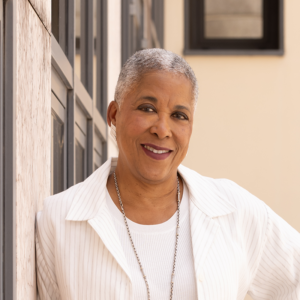
In this episode, host Paul Kuttner talks with Dr. Jamilah Ducar, Associate Vice Chancellor for Engagement and Community Affairs at the University of Pittsburgh, about what it means for a university to be a good partner with its surrounding community. They explore Pitt’s listening-first approach to partnership, strategies for building (and rebuilding trust), and the everyday work of centering relationships.
Jamie shares concrete examples of community development and educational partnerships, illustrating how universities can align faculty, staff, and operations to support neighborhoods. They also discuss the skills and organizational architecture needed for effective community engagement. And Jamie shares a bit about her journey into this work, from early family life, to the service industry, to human services, to higher ed.
For more about the University of Pittsburgh’s approach to community engagement visit https://www.community.pitt.edu/
To hear Jamie talking about her dissertation research, check out this video.
Read The Community Engagement Professional in Higher Education and its companion the Community Engagement Professional’s Guidebook
————————
To subscribe to this podcast, visit https://partnershipwork.org or subscribe on your favorite podcasting platform.
Partnership Work is an independent podcast, produced with the support of Urban Media Arts in Malden, MA. Visit them at https://urbanmediaarts.org/
The music for this episode was Hazy Reflections from the NFL Music Library on APM Music.
Jamie Ducar:
Pittsburgh is the home of Fred Rogers, of Mr. Rogers, right? And so we are a city that always asks, “Won’t you be my neighbor?” Right? And being neighborly is one of the things that we really aspire to here as a city. I think it’s just part of our city brand. So Pittsburgh has officially gotten me, right? I’ve been here for long enough, but also literally I’m talking about our neighbors.
Paul Kuttner:
Hey, welcome to Partnership Work, a podcast about how we move from isolation to action. I’m Paul Kuttner. That neighborly voice you just heard is Dr. Jamie Ducar. Jamie is the Associate Vice Chancellor for Engagement and Community Affairs at the University of Pittsburgh. I asked her on to tackle a question that a lot of folks in higher education are working on. What does it look like for a university to be a good partner with its surrounding communities?
There’s plenty of discussion these days about the value of higher education, usually focused on rising costs and whether college prepares students for gainful employment. These issues are critical, but they are only a part of the picture when it comes to the potential value that a university can bring to a city or a region. Historically, town-gown relationships have often been contentious, with too many institutions putting their needs before those of the larger community. But people have been working hard over the last few decades to turn that around, and the University of Pittsburgh is at the cutting edge of that work. As Jamie explains, when universities become true partners with their neighbors, they can bring their people and resources to bear in ways that benefit everyone involved.
In our conversation, Jamie describes Pitt’s approach to partnership, an approach that begins with listening, that centers relationships, and that asks the humble question, how can we help? Jamie shares the early lessons she learned working in the service industry and human services and the influence of her family on her trajectory. She talks about rebuilding trust with communities that have been impacted by displacement from the historical growth of the university. We talk about the skills and knowledge you need to do partnership work in higher ed and how universities can coordinate across all their different offices and departments and centers to have a stronger impact.
This episode marks the beginning of Partnership Work’s second season. And we’ve got some really great guests lined up for you in the coming months. If you enjoy the podcast, please rate and review us on your podcast platform or just share it with someone you know. You can also sign up for the free Partnership Work Substack newsletter at partnershipwork.substack.com, and all our episodes, transcripts, show notes, and more can be found at partnershipwork.org.
And now, Jamie.
Thank you so much for joining me on Partnership Work, Jamie. It’s good to see you.
Jamie: Thank you, Paul. I’m really excited to be doing this with you.
Paul:
So we have a lot to talk about. I want just to give a little bit of context for people. So you’re at the University of Pittsburgh, and you are the Associate Vice Chancellor of Engagement and Community Affairs. So that’s a lot. That’s a big title. What’s the kind of quick and dirty way that you explain this work to people?
Yeah, yeah, that’s a great question. So at least at the University of Pittsburgh, our office is proud to sort of be the stewards of positive relationships between our broader communities and the university wherever possible. So we think about that in lots of ways with our neighbors close to campus, with communities of impact, communities of geography, any way that you can think through the ways that people come together to solve problems, right, and learn more about each other. We try to be at the table and ensure that Pitt’s at the table.
Paul:
What does it look like? Can you give us an example of kind of a partnership or a project that really excites you and maybe a couple of things that you’ve learned working with it?
Jamie:
Yeah, yeah. So there’s been some, I think, really fun, really fun partnerships throughout the years. One that I’ll share just sort of as a moment of historical reference, right, is that as part of my role at Pitt, I now serve as chair of our Oakland Taskforce, right? It’s a place-based group of all of the organizations that have a footprint in our neighborhood. It got established in like the 1970s. And so my former boss, Paul Supowitz, was a former chair.
It was as part of his tenure that Oakland Taskforce oversaw the redevelopment of what was a large parking lot, right squat in the middle of our civic center of Oakland. It is now a public green space called Schenley Plaza. It now hosts music festivals, vintage clothing stores do pop-ups in the tent that’s available there. You can sort of lay out, get food on a nice day. Our students are just out, right? It is a beautiful public asset, place of respite.
This body, right, the Oakland Taskforce was composed of the right folks with the right relationships to sort of help that swap happen, right? To sort of force everyone to sort of think beyond the pain of the sort of actual redevelopment to what it could be.
For the future of our Oakland Taskforce, we’ve got what we’re calling our Oakland Neighborhood Plan, and we’ve got all sorts of goals and recommendations. And so part of my job has been sort of with my chair hat sometimes and with my Pitt hat sometimes. What I’ve been doing is sort of sharing out within the university to see how it is we can show up as a partner in helping this larger plan happen, you know.
Economic development. We’ve got faculty. We’ve got anchor leads here. We’ve got finance and operations specialists. We’ve got connections with our city and county counterparts that are thinking about economic development broadly, right? It is where I think I am most proud to see our university sort of in action, right? When I can tap one of my colleagues and say, hey, would you be willing to sort of join this group? They’re thinking about public art quite deeply. And I know you’ve got some expertise here, you know, like, would you be willing to support for something that’s a bit more sort of like neighborhood driven, right?
I think that we’ve done some amazing work in being able to support our young people. And so as part of our office, we have what we call the Gismondi Neighborhood Education Programs. They’re a set of out-of-school time and in-school tutoring initiatives that align with our neighborhood commitments. We started off with, I think, our most structured, our most formalized program focused on growth in literacy and math for first through fourth graders.
That program then started to inform how we were thinking about how we talk to our other sort of neighborhood partners, right, around what they wanted to see for their young people. So we started in Homewood, right, and then we had. What we called our STEAM studios, right? Where we worked with our neighbors and our schools to think through what would be helpful from Pitt for us to support young people, right? Like what are those STEAM concepts that you’re looking for us to offer? And so out of that, we started a STEAM Saturdays program where we’re able to take a cohort of Pitt students that have a faculty advisor and they are running through sort of one-hour blocks of enrichment with our young people in the Hill District.
And we’ve continued to sort of go through this process of partnering with people. An out-of-school time program, right, or community organization that’s already deeply working with young people go through this process of sort of what is helpful to you, right? And now we’ve got this set, this beautiful set of programs across four neighborhoods, seven schools. We anticipate hiring as many as 100 students, Pitt students next year to drive the heart of this process, right?
And so that all started with what was a very small group of folks thinking through, how can we help the children in Homewood get to proficiency? And it’s now this amazing opportunity for not only the young people that we’re working with in all sorts of contexts to feel like they’re a part of Pitt, that Pitt students care about them, that the university is investing in their neighborhoods.
But also a great opportunity for our students, right? Like to make a competitive wage and do something that they might care about intrinsically. I didn’t feel like I had that opportunity as a college student. And so, you know, what would it have meant to be able to do something like this and realize much earlier what my career pathways could be as a person that deeply cared about community?
And so that is not a partnership, right? But I think it’s this network of partnerships that all work in concert with one another. And it wouldn’t be possible without the university taking a listening-first approach and really centering relationships and partnerships is how it is we get it done.
Paul:
Those are really good examples. I think they show these are not things that the university is trying to own. It sounds like these are things where you’re trying to figure out: how can our university play a role? What is the appropriate role? How do we fit into these larger efforts? I think that comes out very strongly in those examples.
One thing I notice is you use the word neighbor or neighbors a lot. Is that like the metaphor, or maybe it’s not even a metaphor, but is that kind of the framework for how you think about what you want Pitt to be in the city, like a good neighbor?
Jamie:
Of course, I want us to be a good neighbor. You know, Pittsburgh, maybe your listeners don’t know, but Pittsburgh is the home of Fred Rogers, of Mr. Rogers, right? So we are a city that always asks, “Won’t you be my neighbor” Right? And being neighborly is one of the things that we really aspire to here as a city. I think it’s just part of our city brand. So Pittsburgh has officially gotten me right. I’ve been here for long enough.
But also literally, I’m talking about our neighbors. Like I am, I am talking about the folks that live in Oakland. It’s 1.5 square miles. It’s a small neighborhood with a lot of big organizations and a lot of long, long-standing residents. So we are actually spending time with our neighbors, walking to their homes, walking to meet them for coffee wherever possible. I actually just missed coffee with one of our neighbors this morning because I wasn’t feeling well, but I’ll catch up with her. But yeah, it is a Pittsburgh thing, but it is also literal.
Paul:
Yeah, I love that. So I want to get back into some of the details of that. But first, I want to ask about you. So you started your career in sort of direct service work, right? Working with families in the community. What were your early jobs like? What were you doing? And what I’m really curious about is, what did you learn doing that work that is still relevant to the work you do today?
Jamie:
Yeah, so I think, right, even before I sort of jumped into the fray with child welfare, right, I came to Pittsburgh, not really knowing the city at all, right, having really no idea what it might be like, what the people were like. And so I felt a bit isolated from the city when I first came here for college. And I took a couple of funny sort of early jobs, right, to make sure I had money. And so I worked at a retail clothing store at the waterfront, right, which is sort of this outdoor shopping development here in the area. And I also served as a waitress.
And so I think that when you’ve worked in the service industry, right, when you see folks that are coming in and in all types of moods for all types of reasons, right, that you start to get a sense of a place, you start to get a sense of sort of what sort of matters to people. And so I think that it was actually that job, right? Being a waitress, working down in Station Square. I think I was 19 years old, right? Sort of navigating the city through this very bizarre sense of like not having very much money, but that sometimes having way too much money and being irresponsible and sort of going out and learning what felt like more about the real Pittsburgh.
And then sort of taking a professional journey of then sort of dialing in on the nonprofit sector as a way that I could take my approach to building relationships broadly and start to apply that to what I was seeing day to day, which was that some folks were having what felt like very fine but transient experiences with the city, right? Like, I’m going to be here for this set amount of time, do my thing, and I’m out. And so I had sort of reconsidered what does it mean to actually care about this place in the same way that I care about where I grew up and the people there.
I especially was thinking about mothers because I was raised, you know, latchkey kid with a mostly single mother. I had sort of a more traditional two-child, two-parent experience with my father in the summers and over holidays. But really my day-to-day was my mother and I, and she worked really, really hard to provide for me. And one thing I learned very early when I started to sort of unpeel some of the layers in Pittsburgh is there were a ton of households here that looked like mine growing up, right? A mother as head of household trying to make it work. And I wanted to sort of better understand what it might mean to support those women in some way, right?
And so I worked in a program called Family Group Decision Making where the entire framework is asset-based family development, right? That a family has had this system enter their lives and largely it’s because of something that has already sort of been deemed lower risk when you think about the risk to a child. And so being able to sort of help families acknowledge their own strengths, pull in some natural support, right, have honest conversations with the explicit and stated goal of let’s get these systems out of your life, right? Like we were here to sort of ensure that you feel like you have what you need and the people you need to be able to figure this out without us the next time.
And so that was a super eye-opening experience to have as my first real professional life. Super high touch, right? I was with my families twice a week. And so you start to really then get, I think, a better sense of where folks miss our safety nets, right? What types of behaviors from large organizations sort of lead to these missed opportunities for families.
And so I pull a lot of that with me in the work that we do here at Pitt, right? The sense that if we slow down a little bit and sort of look around us, right, and stay in constant conversation with as many folks as we can, that we’ll be much more agile when it comes to taking action and also much more agile and sort of being relevant in the conversation at all.
Paul:
It sounds like when you showed up in Pittsburgh, you already had a tendency toward relationship building, commitment to families and wanting to see families succeed and the challenges they face. Sort of where, maybe looking farther back, like are those things that you really felt growing up? Like what about your background, your family kind of fostered those things in you?
Jamie:
Yeah, I think it comes from several places. So, one, I again sort of really am grateful to my mother for what she emphasized with me as a young person, right, which was that our families and our family stories were really, really important. So her family is from Greenville, North Carolina, and my grandparents were part of the Great Migration north, right? So they sort of packed up their bags as soon as they graduated high school and headed up to New York City.
But I knew my great grandparents and their home in Greenville was our family’s sticky center, right? I got to meet all of my second and third and who knows, like maybe not even really cousins, right? But they’re the cousins. And I got to help my great-grandmother sort of, I wouldn’t help to pluck the chickens, but I would help to sort of pluck the chickens that she was sort of like right from the backyard, right?
And I think the experience, it’s very different, right, than this just mom and me dynamic in a very urban place to then have this sort of warm extended family, right, where it feels like my family is half of the town and you just naturally have to approach everybody that you meet as family, right, as a potential family member. To then thinking about, you know, how because she was a working parent, right, a working mother, I needed places to be as a child.
And so for me, church was sort of one of those places that I spent a lot of my time. So my Girl Scout troop, right, was based in my church community. It’s where I got to meet people that I didn’t know through my school connections, right? And again, get the sense of just knowing my place and my town better. But I didn’t think about it as a kid this way. Now I realize that my mom had sort of set up this protective network for me, right? So that she could do what she needed to do when she was off working. But, you know, being part of a community as a kid that spent a lot of time alone, right, it was really important to me to then have that other side where I sort of was naturally part of something bigger than myself. And my mom did a great job facilitating that for me.
Paul:
What I’m curious about is what the challenges and the hurdles are to getting to that point. We hear so much about town gown tensions and distrust of institutions, you know, and some of those things have really been kind of on people’s minds and in the news recently, but really longstanding tensions. So my question for you is, you know, to what extent do you face distrust and skepticism towards what the university is doing? How do you address the kind of challenges and people who might be reticent to work with you or concerned about things that the university has done in the past? Is that a reality in the work you’re doing?
Jamie:
Yeah, I think anytime you’re working with people, you’re working within pretty broad conceptualizations of trust building. There are histories, very real histories, of the university being extractive of the university’s sort of whether purposefully or inadvertently causing harm. And it is a reality that our actual campus footprint is much larger than it was in the lifetime of many of our partners close to campus, right? That they have direct memory, oral tradition, friends and family that are no longer there.
So that’s very real. Holding on to our histories, being the sort of keepers of the flame, that was powerful. The part of the role that I learned once I got to Pitt. It was something that was really important to my mentor, Dr. John Wilds, right? That if we can show that we’ve done our homework and we understand where there is rightful cynicism, where there might be some resistance. Where our goals might be in tension with another community’s or organization’s goals, you name those things and work through them, right, in the hopes that there’s still something there for us to come to the table around, right?
So you can acknowledge it. You can even facilitate a process of learning, right, for others to be sure that folks know and have good information. And then together, you’re hopefully then focused on what’s next. From my vantage point, we do a really good job of recentering on the path forward. Yes, it is difficult to work with an institution that may have directly had a negative impact on a place, on a family, right? And so showing up as a person within that organization that’s willing to sort of then work together to tell a new story, I think is something that can thaw even the iciest relationship and hopefully start to rebuild capacity in ways that are helpful.
Paul:
So I want to make sure we put aside some time to talk about the research project that you and I are involved in, that you are helping to lead. And maybe we should start with the term. So the project is focused on community engagement professionals, CEPs, which is a term that could be applied to you and me. Could you just start by defining what is a community engagement professional?
Jamie: Oh, so we’re going to get into our inclusion-exclusion criteria here. We’re going to go straight into the weeds, right? So a community engagement professional for the purposes of this book, right, is someone who works for a higher education institution or is an organization that partners closely with a higher ed institution to support, community-university engagement. And so we are specifically thinking about staff roles, right, rather than, for example, faculty or students, the staff roles that are directly facilitating some level of partnership work for the university.
Paul:
Great. Could you give just a little bit of background on the goal of the project?
Jamie:
Yes. So the goal of the project is to refresh the Community Engagement Professionals Guidebook that was published in 2018. This book provides really the essential framework to think through the knowledge, the skills, right, the dispositions, and the critical commitments of roles that support community engagement and higher ed.
Paul:
Yeah, so I really, I think there’s a lot of connection between this project and this podcast. So I really wanted to ask you about it. You know, I interview people who do partnership work and really trying to figure out what does it look like and what does it take? And I feel like this project really gets at the heart of what does it take? What do you need to know? What do you need to be able to do to really build partnerships? And so I’m wondering, I know we’re not done with the project, but so far, what have you seen as some of the main skills or knowledges or capacities that people really need? What have really stood out as the central pieces to you?
Jamie:
Honestly, what is standing out for me are things that, maybe we take for granted, right, as folks that are actually in the work. So I’m working on the core chapter of this book, which is intended to provide a little bit of a narrative of what the through line will be through the functional chapters. And so I’ve had the opportunity to look at the early research of the other 10 chapter teams and zoom out a little bit.
And so for me, this deep sense of shared purpose and understanding of what it takes to create resilient relationships. Was something that was very meaningful for me, to be able to sort of be affirmed in that that is something that is central and core, no matter what your role might be in enabling community engagement for higher ed, right? That it isn’t just a, “Oh, it just so happens to be, you know, you’re my people.” Like, no, it is something where folks either have come into the work, right, with a lens of public purpose or are very quickly sort of able to connect public purpose to their functional roles in some way. So that, for me, is an insight that I love that I get to sort of expound upon for sure.
Paul:
Yeah, that’s a great one. Resilient relationships. It’s not just about it all being happy and everyone liking each other. It’s about building enough trust and connection that when tough things happen, when maybe even harm is done to that relationship, those relationships can bounce back because they are strong and deep. I really like that.
Jamie:
Yeah, yeah, right? Right. Resilient relationships acknowledge that there can be some conflict in there. And so with some functions more than others, you’re sort of actively managing conflict on behalf of the university and sometimes feeling this sense of having more than one accountability core. That you need to be attentive to your professional role, but you’re also attentive to yourself and your own internal values access as you’re navigating this work.
Paul:
I do want to ask about one other piece. So one of the challenges I know that I’ve seen personally in higher ed working with communities, it’s often very atomized. I think a lot of universities are thinking about how do we better connect and coordinate across all of these different relationships with communities and institutions outside the university. This is something you’ve thought very deeply about, studied in your dissertation.
So we don’t have a ton of time, but I’m really curious, as you’ve kind of moved up the ladder in higher ed, and you’ve been charged with institutionalizing and structurally sustaining this work across an entire university, what are one or two of the biggest lessons that you’ve learned about what it takes for a university to take these commitments on as a whole in a coordinated and connected way?
Jamie:
So I know we don’t have a lot of time, but I’m so excited that we got here, right? So I am going to pull on the dissertation framework, right? And I absolutely love that I was able to, again, learn from some amazing community engagement professionals in thinking about full participation, right?
And so in looking at that work around full participation, I sort of pull this concept of organizational architecture into the frame, right? And so organizational architecture, it necessarily means that organizations make intentional choices, right, about how it is they structure themselves and resource themselves.
And so if you think across infrastructure, right, design and conditions and invest in all three areas. I have directly seen and also studied, right, that you’re able to build a really resilient core for partnership work, for community engagement. And that means that, yes, you need on the infrastructure point, right, like those easy things. How are we capturing what we’re doing and how? How are we able to find one another and learn more about one another? How do we find who else might be intersecting with a community that’s important to me? And the design is just being willing to share, right? What pieces of roles are most helpful together, right? What does it mean to actually scope out a position that can be helpful to the larger ecosystem of partnership work at the university?
And, of course, the conditions, right, the cultural stewardship of, “You might have done it differently somewhere else. Here, I would love to tell you about how it is we do things here.” Celebrating your colleagues’ wins, right? Creating communities internally that are able to support one another and have this sense of, “Yeah, I have a group of folks that I turn to as my community across disciplines, across even positional identity, right? And together, we are doing this great work for the University of Pittsburgh.”
Paul:
We’ve talked about a lot, and I want to make sure people can follow up on these ideas if they’re interested. Are there any particular places online, particular things people could read or listen to if they wanted to learn a bit more about what you’ve been talking about?
Jamie: Yeah, so our team’s website has a peek into our community engagement framework at Pitt. So our website is just community.pitt.edu. I am on LinkedIn. I don’t do as good of a job as I would have hoped in posting regularly about what’s sort of hot right now. But I’m very open to emails, to chats. If folks want to follow up. And then, of course, you found where I really took the deep dive in my dissertation. So I’ve been thinking about sort of what’s next on that front as well to keep that work top of mind. So hopefully more to come.
Paul: There is a dissertation dish video of you sharing your framework online.
Jamie:
Yes, yes. Yes, it was awesome to do the dissertation dish. And so folks can find that. I’m actually not sure which website.
Paul:
I’ll put it all in the episode notes.
Jamie:
Okay, perfect. Thank you so much for joining me, Jamie. It was just a pleasure to talk to you. Thank you, Paul. I really appreciate it. This was fun.
Paul:
Thank you all for joining me today. Partnership Work is an independent podcast. It’s produced with the support of the wonderful organization Urban Media Arts here in my hometown of Malden, Massachusetts. Check them out at urbanmediaarts.org. I’ll see you next time. Take care.