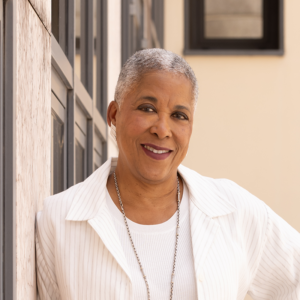
Join Paul Kuttner as he sits down with Judy Pryor-Ramirez to trace her journey as a community-based, participatory action researcher. From playful beach-themed data labs to virtual story circles, Judy shares a vision of research that shifts power, builds community, and sparks action.
Judy is a Clinical Associate Professor of Public Service at the NYU Wagner Graduate School of Public Service, where she studies and teaches about social justice leadership. Judy is also a consultant, partnering with social justice leaders to facilitate transformation for their teams, organizations, and networks. Her career has spanned government, nonprofits, and higher education.
To find out more about Judy you can visit her website: https://www.judypryorramirez.com
To learn more about the Story Circle Interview Method, check out Judy’s chapter in the book Anti-colonial research praxis: Methods for knowledge justice.
For some history on story circles, Judy recommends checking out Lizzy Cooper Davis’s chapter, The Free Southern Theater’s Story Circle Process.
Learn more about the national network Judy talks about, Imagining America
For more information about critical and community-based participatory action research, Judy recommends some of her teachers at the Public Science Project.
————————
To subscribe to this podcast, visit https://partnershipwork.org or subscribe on your favorite podcasting platform.
Partnership Work is an independent podcast, produced with the support of Urban Media Arts in Malden, MA. Visit them at https://urbanmediaarts.org/
The music for Partnership Work is Revolution, composed by John August Pregler and Bernard James Perry II.
Paul Kuttner:
Welcome to Partnership Work, where we explore the art and science of collaboration. I’m Paul Kuttner.
My guest today is Judy Pryor-Ramirez. Judy is a Clinical Associate Professor at the Wagner Graduate School of Public Service at New York University, where she studies and teaches about social justice leadership. She is also a consultant for social justice leaders and their organizations and is currently getting her Ph.D.
There’s a lot we could have talked about, but I invited Judy on specifically to discuss her approach to research. Research, in one form or another, has been one of the through lines in her varied career, which has spanned jobs in government, nonprofits, and higher education. Judy works from the tradition of participatory action research, or PAR. PAR researchers partner with communities and organizations that are closest to the issue at hand to do research together and use that as a springboard for action.
As you’ll hear, Judy also experiments with creative and playful methods in her research in ways that foster relationships and community. Most recently, Judy has been developing what she calls the Story Circle Interview Method, which she describes as a sort of remix of story circle practices that came out of the Black Freedom Struggle. We go deep into what that practice looks like.
Before we start, a quick ask. If you like this show, please rate and review it in your podcast platform. It’s the best way for us to find our audience. That’s enough of me. Let’s get to the interview. Judy Pryor-Ramirez, thank you so much for joining me on Partnership Work.
Judy Pryor-Ramirez:
Thank you so much, Paul, for having me here. It’s such a pleasure. As you already know, as a fan of the podcast and listener, it’s great to be on.
Paul:
Excellent. So to start off, I understand that you recently had something of a beach trip. I wondered if you could tell us a bit about this virtual trip to the beach that you took with some of your colleagues.
Judy:
Yes. So I’ll tell you a little story. Last summer in June and July of 2025 I had the good fortune of being part of a research team at the University of Richmond, and we were doing an organizational assessment that we called an attunement process, which we were really listening in to their community of stakeholders in order to what we might do in a strategic planning process, think about work forward.
One of the approaches that we took to analyzing the many stories that we heard was something called the data lab. And that was an approach that they had developed as a center for assessing all kinds of work. But they hadn’t thought of using that approach to assess and analyze the stories that we had collected in the process.
And so I’ll tell you about the data lab, a couple of things that are important about it. One is that it’s play-based. And the idea is that you’re making sense collectively, in a group, of data through play. And the way play comes in is that the group chooses a metaphor that feels resonant.
So we were working over the summer. Many of us were lamenting how much we wanted to go to the beach. And the beach theme just kept coming up about the sun and, you know, it’s quite hot in the summers in Virginia. And so it was just something that we used and extended that metaphor and brought into our data analysis. And it was a way for us to look at the data through aspects of a day at the beach.
So when I came in to set up the room to get us ready, I put beach towels out, I bought some shells and kind of spread them around the room. We had sand pails, we had, you know, beach toys and balls and everything sort of that really brought the theme to the space. And when we were looking at the data, we also used elements of the natural world to help us make sense of what we were seeing. So one colleague said, yes, let’s have the pointy shells represent the challenges in the stories that we’re reading. Let’s have the seaweed serve as sort of the emotions because it kind of moves and kind of, you know, sometimes attacks us or it kind of soothes us. And then another person said, let’s think about a fisherman’s net as a way to hold the stories about the way that the center connects people and brings people together across difference and at the institution.
So it was a lot of fun to work with a metaphor and to think about how we can be playful, Find joy in research, and that research isn’t something that those folks over there go do, and that we can see, most importantly, research as a practice that we can build skill around, build partnership and relationships around to deepen our work together.
Paul:
I love that. It’s a good start just to sort of shake us up that we’re not going to be having a conversation about the normal kind of research that we’re often used to. Let’s back up a little bit. You didn’t necessarily take a traditional route towards academia. Did you ever see yourself doing research? Is this surprising to find yourself excitedly talking about research on a podcast?
Judy:
Yeah, I am because I think for a long time, I didn’t see myself as a researcher. I have a lot of respect for my colleagues who came through the traditional route. I’m currently a PhD student at the New School for Social Research. So going back to complete my doctoral work in something that I had wanted to do for a long time. I really first learned about applied and policy research. My first jobs were in local and state government as a policy analyst. And so I knew in college, I really enjoyed researching. I just didn’t know or understand as a first-generation college student what it meant to be a full-time researcher, a professor. I had no conception of that.
And so my early work in research was writing policy briefs and memos and engaging large data sets, public data sets at the New York State Department of Education when I was working there. When I was working for New York City Council, I was really drawing a lot on secondary research and kind of pulling together these memos for the elected officials for the Committee on Education that I staffed. So I had an opportunity to engage in that kind of, you know, research for policy making and decision making, but that’s not the same exactly in terms of the research that I’m doing now.
Paul:
You work from the tradition of participatory action research, and you have your own take on it. But I want to talk a bit about that term. Could you share how you define participatory action research, and where did you first learn about it, and why did this approach speak to you as a person?
Judy:
I’ll start with the latter question and come forward into the definition. I think I came into it largely out of desire for wanting to know in different ways and to know in community.
So I first came across it without having the definition or the term. And one of my really early positions, I had the good fortune after graduate school, I went to Teachers College at Columbia University, to work at a new center called the Center for Educational Equity, led by a legal scholar, Michael Rebell, who actually in his legal scholarship brought community together. And part of some of my work was to help coordinate. I remember working in Harlem communities. I remember those voices were a really important part of how he was creating his research agenda and advocating using the tools of legal scholarship and litigation to make change in the state of New York, and particularly with respect to public education and the funding of those schools.
Fast forward probably about 10 years later, I come into work at centers for civic engagement. There is where I learned the kind of technical term for it. And as a director of such centers, I was funding faculty doing that work.
In terms of definitions, for me, I would say that I sit in the kind of critical camp where we think about the way in which the research can unsettle and shift power relations between individuals on the project and that the results of the project actually catalyze some kind of change. That’s how I think about this research is that it’s a kind of collaborative research that moves and shifts for change. I’m also someone who practices really kind of community-based as well, really thinking about geography in certain places. And so my practice has often been projects in particular communities and places or particular organizations.
Paul:
Got it. So how does this differ from maybe more traditional kinds of research?
Judy:
For me, I think a difference is there’s no prescribed agenda, that the research questions, hypotheses are not predefined at the start, and then you’re going into community. Those questions, those hypotheses are created together with the community.
I think another component that feels distinctive to me about this approach is that at, if not at all moments, at strategic moments, you’re thinking about what does participation look like of those who need to be involved in this aspect. One thing I’m learning in my practice is that not every single aspect of the research project needs to have participation. And I thought it always had to. And I’ve learned that we can be a little bit elastic and flexible. And but that is made in that kind of decision making from the start when you’re setting up the research design with the questions, with the kind of objectives of the research.
Paul:
I want to talk a bit about sort of your first steps into doing some participatory action research. Like, what were those early experiences like and what did you have to learn along the way?
Judy:
Mm-hmm. I’m thinking about my project that I came on to in 2019, a project that was at Drew University in Madison, New Jersey, so a suburb of New York City. I’m based in New York City.
We received federal funding from the Corporation for National Community Service, CNCS. We were part of a cohort of 16 or so other higher education institutions to identify a community issue and to bring community and to use CBPAR as the actual approach on the project. Our issue was identified in this group of folks who ranged from individuals who were using a voucher to make home, as well as undergraduate students with lived experience being unhoused, nonprofit workers, faith-based leaders, many folks, probably about 24 at our largest individuals across the table.
And so what we identified was a gap in the system, particularly as it relates to onboarding, preparing, and retaining landlords so that there are sufficient units in the county for those who have the voucher. Because one of the largest pieces in our research found that folks with the voucher were not finding units in time, in the very short time that HUD gives you to find your unit with the voucher.
And so our action part of the project, if you will, was we designed a landlord support program that would train interested landlords, those who wanted to think about using either their homes or their properties as Section 8 or Housing Choice Voucher properties. And so that’s what we did. We ended up receiving a $300,000 grant to roll the program out. And now it currently lives and exists with one of the nonprofit partners that was on our project. The last time I checked, we had met our goal of 50 landlords in the system using that. So for a small county like Morris County, that was a real success. And we were very excited that we were able to leverage the many relationships that quite frankly existed before the project and the timing was right to come together and we had the people around the table to really make this intervention happen.
I was really tentative at first to join that particular project I think because of my critical orientation to PAR work and wanting to ensure that. Someone from the community might have this spot. And I remember even pushing back a year prior when the PI had invited me to join. And it just wasn’t the right moment. But I also was like, I’m not based in New Jersey. And I really thought that this position ought to be for someone from New Jersey, who I did end up recommending a really wonderful colleague. But another role opened up and my colleague said, I really think it’s your skills. We need your skills of facilitation. We need your skills of bringing people together and working through difference. And so that is what convinced me.
And I was reminded that we can be from outside of the community and come in. And there may be other parts and positions of our lives that connect us to the project. And there, there were some of my own personal experiences with housing growing up that linked me to and where I found solidarity with the project.
Paul:
You often bring up your parents when you’re talking about this work. How did your parents and your early upbringing shape the partnership worker and researcher that you’ve become?
Judy:
Yeah. So as an individual with mixed heritage and identity, I think there’s some inherent partnership work that goes into that. My father is an African-American man from Richmond from the South. My mother is a first-generation Mexican-American woman from Texas and the Tex-Mex borderlands. She grew up in Corpus Christi, but we have family all in the Rio Grande Valley in Texas, where Texas and Mexico meet.
And so I would say one of the earliest experiences that I recall that I think makes me think of partnerships. My grandparents moved from Texas to Virginia when I was probably about five or six and was really transformative in many ways. But one of the ways is observing how they built community in a place that had very little context for Latinos at that time, how they navigated a society with limited English and how they really left behind a legacy because of their, I would argue, it came out of their kind of Christian training and wanting to be of service.
They were really a home for many individuals who were coming from Mexico and other parts of Central and Latin America. I saw them opening their home, cooking dinners, hosting meal shares, and just taking care of other people and doing that through their church. I think so much of my partnership work comes out of the notion of care and wanting to bring care to work we do with others, whatever that might look like. And I think I learned that through my grandparents and through my family. Really, they were kind of those bridge builders and connectors for many people.
And so by the time they passed away in the mid-aughts, Richmond was a very different place in terms of the growth of the Latino community. And there were so many people at their funerals just coming up to me, my sisters, and other family members remarking about how crucial my grandfather or my grandmother was to their establishment and just getting settled here. And I saw that very early on. And I think that that informs some of how I think about class solidarity, solidarity just in the kind of mutual aid and what it means to work with others very locally, hyper-locally, to support when our systems and infrastructure, you know, sometimes fail or are designed not to serve us well.
Paul:
What about your parents?
Judy:
Hmm. You know, I think a story about my father that really kind of I hold on to is he was, so he was born in 1944. He grew up in the Jim Crow South, Virginia, and he did not graduate from high school. He went to work very young. He was a union man. So I also saw growing up when he would go, when the union would go on strike, he’s, you know, he did not cross the picket line. He stood with his union. And so there were always these moments where there were different, you know, moments of bargaining the next contract. So I was aware that he was part of something bigger than himself and others and that they were working together for some different kind of set of conditions.
What I didn’t know, and he never shared with us, but I learned from an older white man colleague of his union, and he shared with me at his funeral that my dad was one of four Black men who integrated that union in the mid-early 70s. And so he never gave off that he was a civil rights kind of guy. Like, I didn’t have that image of my father. He was just a hard worker. And so to learn that he was committed to integrating, to being a part of that struggle for Black folks to have connections. And to improve their lives. I just, I thought that was such a beautiful story and, and it helped me see how I’m connected to broader black freedom struggle. And that to me, I hold onto that quite a bit.
In the case of my mom, she didn’t go to college. So I’m a first-generation college student, as I mentioned before, she did serve our country in the military. She went to the, at the time it was the women’s army corps. And so she, I think just seeing that she chose to leave her very, you know, small community in Texas, culturally tight, and quite frankly, a patriarchal home where our grandfather kind of ruled. And her decision to go to the army was to get out of having to get married and have babies. And that would have been the life that would have been prescribed to her. But she wanted something else. And so, I think my mom, I don’t think she would call herself a feminist, but she is absolutely a feminist. And that feminist tendency to seek a better life and to change the condition and the relationship to patriarchy is something that I see her consistently doing, whether she has the language for it or not. And so, my feminist orientation certainly starts, you know, from observing and witnessing my mother’s life.
Paul:
That’s beautiful. So, you’ve developed something you call the Story Circle Method. It’s sort of an alternative to traditional interviews or focus groups. It’s a different way of listening and learning from people. So I’m really curious about what was happening that led you to develop this method, who did you develop it with, and I guess what I really want to know is like what was lacking or what was not right that made you feel like we need a different way of doing this. So, if you could share that kind of through the story of how it came about.
Judy:
Yeah. So, in 2020, I was invited to consult on what we might call a network assessment report with a colleague. And it was actually this is interestingly connected to my family and my life, it was actually for a network in the Texas region that my grandmother and my mom and my grandparents and family are from. So that Rio Grande Valley, Brownsville, Texas, more specifically, but they also worked as far west as Harlingen, Texas, where my grandfather’s from.
So, I immediately said yes, because it would reconnect me, even if I couldn’t get there physically because of the COVID-19 pandemic. It meant something to me personally to be working within the geographic space in which I still have family.
And so, the network was called the Equal Voice Network, and they had several across the country. And this happened to be the Rio Grande Valley network. And they were going through a moment of change and really needed folks to come in and do, you know, assess the network, tell us where we need to improve, dah dah dah. The network weaver, though, was like, but we don’t want to do it in the ways that we’ve had other consultants do it. And I really appreciate that she gave us a lot of room and space to develop something.
One of the steps that we needed to go through was just assess and hear and learn about what is happening currently in the network. How do people understand themselves in the network? What’s needed to move forward? Those kinds of things. And so I pitched the idea of the story circle practice without having an interview method design exactly attached to it. But I described the story circle practice and it’s as simple as it sounds. It’s sitting in a circle telling stories. And I think that’s what really attracted me to it is its simplicity and the fact that because of the pandemic, we still could do it virtually. And I didn’t need to, I didn’t have to, we didn’t have to be in person and that we could construct the story circle conversations over Zoom. And that’s what we did for the community in Texas.
I think I’ve shared with you is I like to make the distinction, and it’s very important for me as a student of the story circle practice, not to co-opt or claim that I invented an entire method, but instead have adapted and sort of remixed, if you will. I’m a girl of the 90s. I remixed something that exists and kind of put it back out into the world that we can use in research. And I would argue other people have already been doing this, but I hadn’t seen it really conceived of in the context of we want to use the stories as data to interpret those stories to either design intervention, either to make some broader meanings, to connect to broader generalizations about a particular social issue that I quite hadn’t seen. And I was really curious about doing that.
And so that’s what I did. I took something that I’ve learned in practice, and I want to name my teachers in this practice because I think it’s really important. So I learned the Story Circle practice as a board member of Imagining America, which is a consortium of higher education institutions and cultural arts organizations committed to change. And I learned from three people, Erica Kohl-Arenas, who brought me into the practice, Carol Bebelle, and Carlton Turner, who all engage in the practice and bring others in.
Paul:
Paint us a picture of what it looks like to engage in a story circle, which, as you say, is a practice that has deeper roots, specifically with your approach and thinking of this as kind of research data.
Judy:
So, a story circle is, you know, constituted of two or more individuals sitting, you know, nearly knee to knee, looking at each other with the intention of being able to listen. It’s, I would argue, not so much a conversation circle, it’s a listening circle. And I say that because everyone is allotted a specific amount of time to talk. And that, to me, having a timekeeper and someone facilitating really does what I call the practice of power sharing.
How many of us have been in a meeting or a workshop and someone has just gone on far too long and ends up taking over so much time that you might not have the time, an opportunity to share? So, for me, that kind of practice of cutting people off, the practice of really honoring the time and saying, this is all we have time for. And we trust that the next round, and depending on how many rounds you do, there’ll be an opportunity for you to go deeper or for you to share something else. And so, I have seen practices where everyone gets as little as two minutes to five minutes or eight minutes. It all depends.
Another thing about the story circles practice and interview method is very flexible and nimble you can adjust it to what your community might need and so in that way there’s not a tight prescription around it but to me the most important prescription to stick to is that everyone has the equal amount of time and if you finish early the idea is not to rush off and start the timer again and let someone else go but allow the silence and so it’s also like listening to silence and holding silence because sometimes in that silence. If someone finishes early, something else may occur to them and they have maybe 30 more seconds to share and they can add to that.
And in terms of the story circle interview method, the way I’ve adapted it is there’s no, like we might experience in a moderated focus group or in an individual interview and qualitative research, there’s no notion of probing, no notion of follow-up questions. There’s another level for as a researcher a practice of trust that the stories that you get are sufficient in and of itself and that that is the data that you will work with and there’s a trust in and whoever analyzes whether you’re co-analyzing or individual analyzes it that what needs to kind of you know rise to the surface that that that will happen.
And so for me it’s it was, it’s been very hard. It’s not always easy I even struggle with it myself. And I think what I find folks mostly struggle with too is how do we tell a story. I think in some ways in our information saturated society with a lot of opinion and analysis, I think we’ve lost the art of what does it mean to say, when the question is “Tell me about a time when you felt most free,” and that it’s not, well, “I feel free because”, you know, and you don’t answer through a story. You don’t say, “There was a time when I was four and I was walking to the park and I sat on a swing and I was going up and back and forth and the clouds were big. And I remember I fell, but I get,” you know, that’s the story we I don’t want a re-articulation of some other person’s idea of freedom and opinion on what freedom is or it isn’t, but really about the embodied experience through story of that.
Paul:
So that’s interesting to me. Since I interview people, I have found that sometimes it is difficult for people to think of, if people jump very quickly to saying things like, well, I always do this or I usually do this. And sometimes people struggle to find a real concrete story. How do you frame that for people? Do you give them time to prepare? How do you get to that story?
Judy:
So, in the trainings I do with folks, I always have a slide around like tips for. Like what it means to tell a story. Sometimes I would also like put up a two-minute video on the screen that shows someone telling a story. I think we learn best from examples. And so, between the tips and or showing a video, just reminding ourselves, what are the key points of story? Characters, a little bit of a plot, perhaps a little tension, setting the background in the context, you know, maybe getting to an end. There’s like the hero’s journey. Is there some kind of arc? So just kind of going back to some of the things that we learned very early in, at least in the U.S. education context, right? And so those are some of the things that I pull out.
What I also remind facilitators is it’s okay if they’re not exactly wrapping it in a story. But I find that with each round and the gentle reminder to tell a story, not opinion, with successive rounds, folks improve on that storytelling because it is a practice. And I think that’s why it’s called the story circle practice, because it’s something that we have to do over and over again, especially in academic circles when we’re not trained in that kind of narrative way. We’re trained in the claim and the evidence, right?
Paul:
Why do you want stories? Why do you want stories instead of people’s general opinions or takes on the topic?
Judy:
Hmm. Oh, I don’t know if you want to ask me that question. Selfishly or just personally, I learned best from story. I read a lot of stories as a child. I’m one of three girls. Our mom took us to the library a lot. It was like the free thing that we could do in our community. So, I was the kid that had 10 books checked out and my sisters had like two. And like whether or not I got through all 10, I just loved flipping through them. Whether it’s picture books I was already on the chapter books pretty early on and was really excited about reading so for me I just I think I just understand the world through story and narrative.
I also think that in some ways we just tap into, stories help tap into just a very age old and kind of human nature way of relating to each other. And I think what I find is that, because in the story circle practice, one of the invitations that a facilitator makes is don’t try and think about your story ahead of time. Just listen and trust that something will come up. When folks actually do that, a very unlikely story surfaces and one that you might not have thought you would share actually comes out.
I think another thing I remind facilitators is we also don’t need to invite people to tell the hardest story. It’s not about revealing all the time, we [don’t] need to go to those hardest places that could bring up, you know, any trauma or cause any harm. And so those are other reminders in the practice to take care.
But with that said, I think for me, it’s the unexpected, the kind of raw, unvarnished insights that come out of storytelling that maybe would not have come out if it was a direct question.
I think the other thing to know about the story circle practice is we’re not we’re also not asking questions. It’s a statement. It’s what’s called a seed story. You’re sort of prompting people to say, “tell me about the prompt,” “tell me about a time when X or tell a story about Y.” And so the invitation is not answering a question, again, it’s framing you to talk about a time when something happened or when you imagine a kind of future. And so, I think that’s a very different like orientation too. And I think that to me feels like an exciting provocation to have people talk from that lens rather than kind of question-answer logic.
Paul:
Yeah, that makes a lot of sense. So, could you talk about the outcome of doing one of these? Can you talk about kind of after a story circle session or series, an example of something you’ve learned, something you’ve observed, something that’s come out of that work together?
Judy:
Yeah. So, I just came back from a conference not too long ago with Imagining America at New Mexico State University, and we facilitated story circle practice. And two things that I always observe when I’m training other folks in the method and the practice, one is not something with words, but it’s just my observation is there’s a lot of smiling.
There’s laughter, there’s just an embodied component about it. That all the tenseness coming into the workshop, folks not feeling like they know each other, there’s just a different sense in the room. And there’s just a real generosity, people recognize that people have shared something. And I think there’s this kind of kindredness that we went through this micro experience together but somehow we’re connected and we heard each other, we heard and we listened. Because again, to me this is a practice of listening. And then in that listening there’s just a slight shift, and I feel that that’s the embodied part.
The other thing I hear folks say is “I didn’t think I was going to tell that story” and I think it’s because of that invitation to try not to prescribe your story, just listen and see what emerges. And a lot of times folks say, “Well it was because when I heard such and such story it made me think of this, even though I thought I was going to talk about this when I heard the seed prompt.” So, then the stories become a little bit informed by each other. So, there is that, that can happen, not always, but those are the two things that I think about that I’ve learned, what I observed.
And I think the story circle interview method is a kind of approach that you have to be willing to have an appetite for ambiguity and for not knowing. And I think that could be said the same for participatory action research. These aren’t approaches that you know what the outcome will be. There’s a lot of unknown in this work. And I do think that my upbringing and my life experiences have prepared me well to withstand and to have a pretty hearty appetite for ambiguity and change.
And it’s a kind of mindset, a flexibility and elasticity that you need in this work. And it’s not always easy because it’s a real practice of trust. It’s a real practice of power sharing. And in my mind, also a practice of care, self-care and community care.
Paul:
So you teach participatory action research at the Wagner School for Public Service at NYU. What are some of the main lessons that you try to teach in this class? What do you most hope they take away from it?
Judy:
It’s a relatively new class. I’ve taught it twice. So, in the spring, it’ll be the third instance. And each time they were taught slightly differently. The first one, we did not have project partners connected to the course, and that was intentional. I didn’t want to rush into partnership. And we know entering and exiting partnerships, it’s a practice of care and a lot of intention needs to go into it. And so, we actually turned our classroom into, we saw that as community and the students then undertook a project there. The second year, this past semester, we had project partners, three different project partners.
And so, the class is both a little theory and practice. I wanted to make sure that it wasn’t just understanding the traditions, reading studies that have really great examples of different methods, but that there was a pretty healthy dose of practice. And that’s really important, I would argue, in a professional school like Wagner that is the degree-granting institution at NYU for the Master in Public Administration, right? These are folks who are going to go into organizations, whether it’s government, nonprofit, philanthropy, or social enterprise, to do some kind of work, right? And so, I think about my teaching it’s important, making sure that they are walking away with some practices that they can carry with them.
And so for me in my class, that looks like, yes, kind of first making sure I want them to understand fundamentally what PAR is and what the possibilities are from a policy standpoint, but also from an organizational standpoint. I also want them to, and I do a little bit of kind of turning the classroom over to them. And we actually practice some of these methods.
So I do teach the story circle interview method. We also do a practice called Data Walks from a colleague in the UK, Alison Powell I believe is her name. And then we also practiced thematic elicitation, which is just a form of collaborative what I might call thematic analysis. How do you do that in groups? And Photovoice has been a practice that I’ve also brought in. So different kinds of methods.
I invite the students to teach back to the class. And so, their job is to study that method. And for one class time, I’m turning the class over to them and they’re giving us some kind of experience in practicing the method.
And then lastly, because project partners are now anchored to the course, and I’m really delighted we have three different partners last year, \the goal was not so much to run a whole PAR study, but to think about the question that our partner had and how might we invite some kind of form of participation into their inquiry and to what they wanna do with their community or stakeholders. And so, it gives my students a chance to go beyond what the text says.
And most importantly, to learn the things that I think only come in practice. And that’s how do you allow for projects to shift and change? I think for many students, they’re like, “Well, we wrote this down. We said, this is what we were going to do with the partner.” And I can tell you each project had different contours and went in other directions and it wasn’t always easy for my students, but I think they learned that research is not always going to go how you have on your research design. I think that’s a really important thing to learn. And how do you communicate and negotiate and make those choices in the moment?
And so, for me, that was a really important thing that they walked away learning. I think the other piece that I wanted them to walk away is to learn to trust themselves because I think that’s also a really huge part of the research process is trusting your own knowing, trusting everything that you’ve been training and preparing for shows up in how you’re able to execute the project.
And throughout the semester, there are these mini milestones where I invite the students to reflect, to kind of provide updates on the project, but less from kind of outcomes perspective and much more from a reflective standpoint about what are you learning about how to move through a lot of ambiguity, partners changing their mind. External threats happening, you know, in the wider world. I know one project particularly had to take an entirely different dimension given, you know, recent political changes in our economy and society. And so how do you navigate those contours of change really became important conversations that we were having in class.
And lastly, I’ll say the other thing is, how do you bring your own creativity and your own self to the project? And so, I really enjoyed that one of the groups that were teaching us back, the Story Circle Interview Method, made an adaptation and themselves remixed the Story Circle interview. And they said, “In order to get into the seed prompt and to feel prepared, we’re going to hold a collage workshop session before we go into our story circles.” And I thought that was such a wonderful riff on the Story Circle Interview Method and for them to see that these methods and approaches are for us to adapt, to use, and that there’s not a rigid prescription for how we need to go about our research. But what does the community need? How are we leveraging the best of our talents and gifts to bring that to the research context? And I think that was something that particular group really took away from the class.
Paul:
Thank you so much for coming. Before we go, could you share a bit about where people might be able to read a bit more about your work?
Judy:
Absolutely. So, folks can learn more about the interview method. There was a book chapter that I authored in an edited volume called Anti-Colonial Research Praxis, Methods for Knowledge Justice. It’s a Manchester University press book, and I’ll make sure you have the link to that. And also, I can make sure you have the link to Lizzie Cooper Davis’s book chapter called The Free Southern Theater Story Circle Process. And that’s also a chapter in a book that was published in 2019. So it’ll tell really, you know, I think a nice history of the story circle process.
Paul:
Thank you all for joining me today. To see the episode transcript and show notes, head over to partnershipwork.org. While you’re there, you can sign up for our free Substack newsletter, where we’ll be sharing updates, essays, book reviews, and more. If you like the show, please rate and review us wherever you get your podcasts. That’s one of the best ways for us to find our audience. Partnership Work is an independent podcast produced with the support of the wonderful organization Urban Media Arts here in my hometown of Malden, Massachusetts. Check them out at urbanmediaarts.org. I’ll see you next time. Take care.